If you’re a CEO, founder, surgeon, advisor, or public figure, your online reputation isn’t “marketing.” It’s underwriting.
It underwrites whether investors take the next meeting, whether patients book the consult, whether a board member votes yes, and whether a journalist frames you as credible or questionable, before you ever get a chance to speak.
And in 2026, the risk surface is larger than most teams admit: Google results, AI answers, Reddit threads, review platforms, knowledge panels, data brokers, and whatever screenshot is trending today.
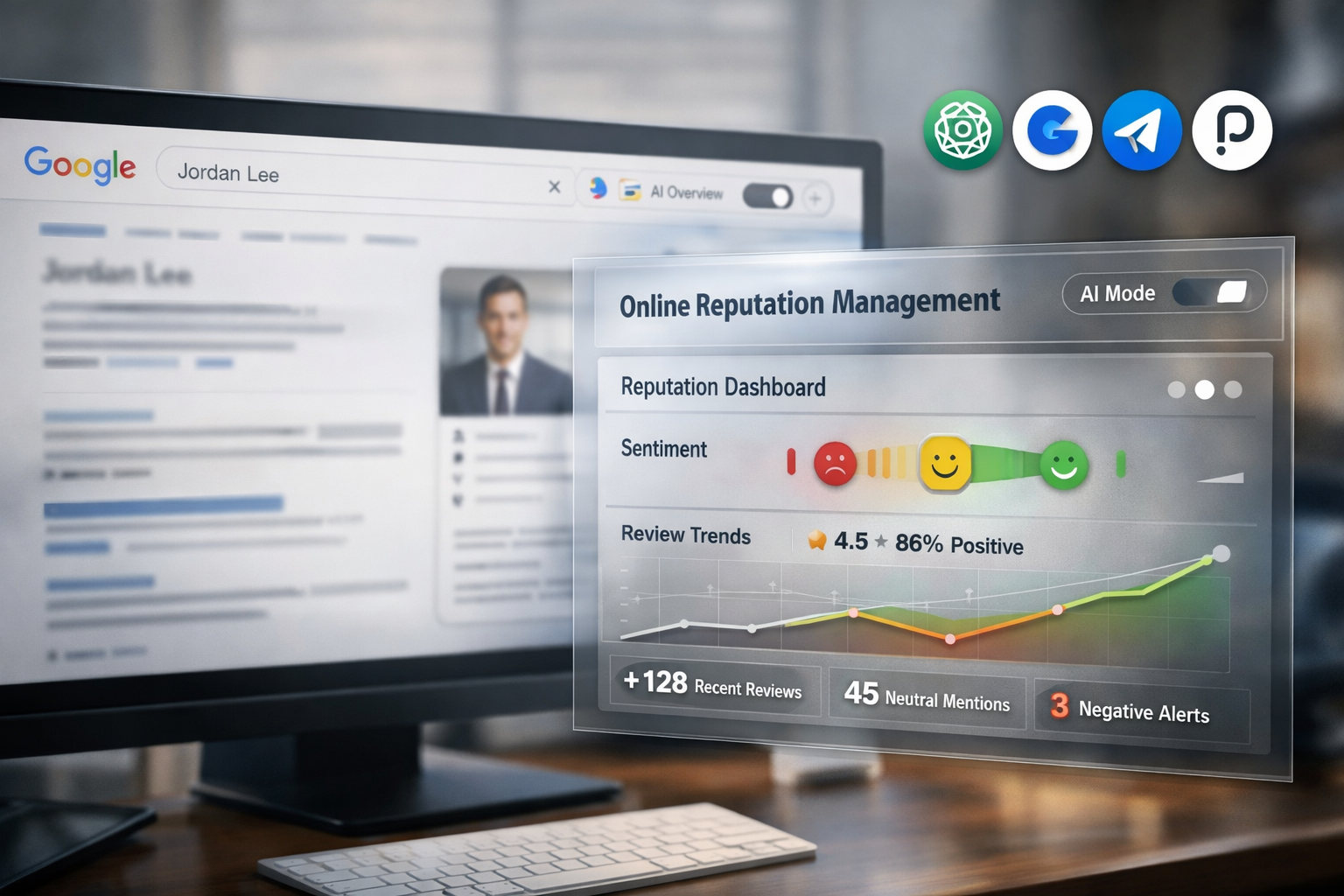
We are in a new era of online reputation management. Your online presence now needs to perform well for both traditional search engines and AI-driven answers.
That means shaping how your brand appears in ChatGPT, Gemini, Copilot, and Perplexity, plus Google AI Mode and Google AI Overviews. The same reputation management fundamentals still matter, but the distribution layer changed: AI systems summarize, cite, and recommend. If you want consistent outcomes, you need assets and signals that AI systems trust.
ORM is how you take control of that surface, fast, legally aware, and measurable. At HLK Marketing, we treat the first page like a system to own, not a vibe to “improve.” No noise. Only outcomes tied to visibility and trust.
Key Takeaways
- In 2026, ORM is a measurable trust-control system that blends SEO, AI optimization (GEO), PR, legal coordination, and monitoring across search, AI answers, reviews, and social platforms.
- Treat Google’s first page as the decision engine: push accurate high-authority assets up, reduce visibility of harmful or outdated results, and control the narrative humans and AI repeat.
- Run an online reputation audit before you act by mapping what ranks (links, snippets, images, video, knowledge panels), diagnosing root causes (content, authority, reviews, or policy), and prioritizing by revenue, hiring, partnerships, and legal exposure.
- During a flare-up, stabilize in the first 72 hours by preserving evidence, aligning PR-legal-comms-SEO, fixing listing and bio inconsistencies, and using calm review-response rules with clear escalation paths.
- Build a defensible search presence by strengthening owned assets with clear entity signals (structured data, consistent NAP, unified bios), earning credible third-party authority, and improving titles/meta to win clicks on branded queries.
- Use removal or deindexing only when policy or legal grounds apply, but rely on suppression by publishing better, more authoritative pages—and prove progress with KPIs like share of first page, sentiment trends, and conversion impact.
What ORM Really Means In 2026
ORM (ORM) used to mean “respond to reviews” and “bury the bad article.” That’s dated.
In 2026, ORM is a discipline that combines SEO, AI optimization (GEO), PR, legal coordination, and monitoring to influence how a person or brand is perceived across the entire digital ecosystem. Not just what ranks, but what gets summarized by AI, quoted by journalists, and repeated by customers.
You’re operating in a world where:
- Results pages are increasingly zero-click (users read answers without visiting sites).
- AI systems pull from the same messy pool of data: your site, Wikipedia-like sources, directory listings, reviews, news, and social chatter.
- Inconsistent signals (name variants, outdated bios, conflicting addresses, mismatched credentials) reduce trust, even if you’re doing great work.
ORM is no longer only defensive. Done correctly, it’s predictive: you spot the weak signals before they become a headline, a lawsuit, or a revenue dip.

The First Page Is The Battlefield
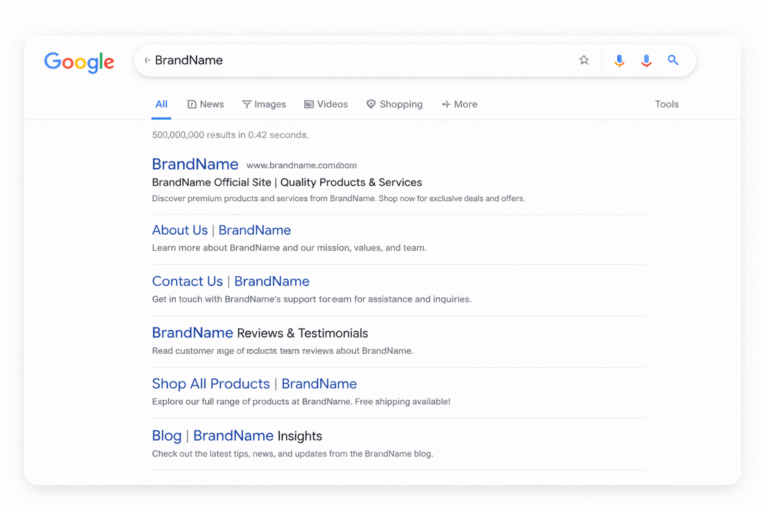
Here’s the hard truth: the first page is where decisions get made.
A prospective client doesn’t read your entire story. They scan a handful of results, a knowledge panel, and a few snippets. They form a conclusion. Then they act.
So the ORM objective is operational and simple:
- Push preferred, accurate, high-authority assets upward.
- Reduce visibility of harmful, misleading, or outdated assets.
- Control the narratives that AI and humans repeat.
And yes, sometimes the right play is removal or deindexing. But most of the time, the durable win is building a stronger set of pages that deserve to rank.
Better pages win. Better authority wins. Better clarity wins.
Owned, Earned, And Paid Assets: What You Can Control
Executives like frameworks because frameworks are governable. ORM is best run through three asset types:
- Owned assets: your website, bio pages, newsroom, YouTube channel, LinkedIn presence, Google Business Profile, official statements.
- Earned assets: media coverage, third-party profiles, citations, awards, podcasts, conference pages, legitimate backlinks.
- Paid assets: sponsored placements, promoted interviews, search ads that protect branded queries during volatility.
The fastest reputation wins usually come from cleaning and unifying the footprint, fixing the confusing basics, then expanding the set of high-quality assets that represent you.
If your digital footprint is fractured, the internet fills in the blanks for you. Usually poorly.
How Reputation Risk Shows Up For High-Stakes Individuals And Firms
Reputation risk is not evenly distributed. High-profile individuals and regulated or trust-based businesses (medicine, finance, law) face sharper consequences because the “trust gap” is expensive.
When a negative result ranks, it doesn’t just bruise ego. It can trigger:
- lost deals and referral partners
- patient churn and consult no-shows
- recruiting problems (top candidates quietly walk)
- compliance scrutiny
- aggressive media attention
And in many cases, it becomes self-reinforcing: the more people click, the more the result appears validated.
Individuals: Name Search, Panels, And Persistent Narratives
For individuals, ORM lives and dies on name results pages.
Common failure modes we see:
- An old lawsuit or messy partnership breakup that still ranks.
- A misleading article that gets republished or scraped.
- A knowledge panel that shows wrong affiliations, wrong photo, or an outdated role.
- “People also search for” suggestions that pull you into an ugly association.
The risk is the narrative lock-in. Once a storyline becomes the default context, every future mention gets interpreted through it.
If you’re a public figure, founder, or high-earning professional, your real asset is credibility. ORM protects that asset.
Businesses: Reviews, Local Pack, And Category Trust
For businesses, the threat profile is broader:
- Reviews and star ratings shape conversion rates immediately.
- Local Pack visibility (especially for multi-location brands) determines inbound leads.
- Category trust cues, from directories, forums, and news, shape how platforms and AI systems interpret legitimacy.
A single Reddit thread can outrank your homepage. A viral TikTok can rewrite your brand in hours. And inconsistent listings (wrong hours, duplicate addresses, mismatched phone numbers) quietly erode trust cues that AI and search engines rely on.
This is why ORM can’t be treated as a “review reply task.” It’s an ecosystem problem.

The Online Reputation Audit: Baselines Before You Touch Anything
Before you “fix,” you measure. Otherwise you’re just doing activity.
An online reputation audit is your baseline: what exists, what ranks, what’s influencing AI, and where the pressure points are.
At HLK, we run audits like incident response, organized, timestamped, and designed to support legal/PR decisions if needed.
Map What Ranks Today (Pages, Snippets, Images, Video)
Document your reality across formats, not just blue links:
- Google results for name + variations (with middle initials, nicknames, credentials)
- brand + “reviews,” “complaints,” “lawsuit,” “scam,” “fraud,” “ethics,” “malpractice” (yes, check the ugly modifiers)
- featured snippets and “People also ask”
- image results (photos can become reputation shorthand)
- video results (YouTube often ranks aggressively)
- news and Top Stories modules
Capture screenshots. Log URLs. Note which results are owned, earned, or hostile.
Tip: run checks in an incognito browser and in multiple geographies if you’re a multi-market operator.
Identify Root Causes: Content, Authority, Reviews, Or Platform Policy
Once you see what’s ranking, diagnose why.
Most ORM problems fall into one (or more) buckets:
- Content gap: you don’t have enough strong pages targeting your name/brand and core credibility topics.
- Authority gap: you have content, but it lacks backlinks, citations, or trusted third-party validation.
- Review gap: your ratings trend is weak, or review velocity is negative.
- Platform/policy issue: a page violates policy (privacy, impersonation, defamation) and removal is possible.
Different cause, different playbook. Teams waste months when they try to “SEO” a legal issue, or try to “legal” an SEO issue.
Prioritize By Revenue, Hiring, Partnerships, And Legal Exposure
Not all harmful content is equal.
A bad Yelp review is annoying. A ranking news article implying misconduct is existential.
Prioritize targets by impact:
- Revenue: which results appear on branded searches right before someone books, buys, or calls?
- Hiring: what does a candidate see when they Google the leadership team?
- Partnerships: what would a bank, PE firm, or strategic partner flag in diligence?
- Legal exposure: what creates defamation risk, confidentiality violations, or escalation potential?
This is how you keep the program rational. Leaders need clarity.
Stabilize First: The 72-Hour ORM Triage Plan
During a reputation flare-up, you need speed, clarity, and coordination… not random posts and emotional replies.
The first 72 hours are about stabilization, stopping avoidable damage and setting up the longer campaign.
Preserve Evidence And Coordinate PR-Legal-Comms
Start here:
- Screenshot the content, including timestamps, comments, and author details.
- Save URLs and archive pages (content changes fast).
- Centralize facts: what’s true, what’s disputed, what’s unknown.
Then align the decision-makers:
- PR/comms owns messaging and stakeholder context.
- Legal owns risk, language, and takedown options.
- SEO/ORM owns visibility, suppression strategy, and technical execution.
If these teams operate independently, you get contradictions. Contradictions become screenshots. Screenshots become headlines.
Fix Listings And Messaging Gaps That Create Confusion
This is the unsexy part that drives outsized results.
Correct and unify:
- Google Business Profile details (categories, hours, services, photos)
- major directory listings (Apple Maps, Bing, Yelp, Healthgrades/Avvo/FINRA-related profiles where applicable)
- executive bios across partner sites, boards, conferences
- name consistency (Hayden J. Koch vs. Hayden Koch, MD vs. Hayden Koch)
In 2026, inconsistent data doesn’t just confuse humans, it weakens AI trust cues, which can change what surfaces in search and AI answers.
Stop The Bleed: Review Response Rules And Escalation Paths
Set rules immediately:
- Do not argue in public. Respond with calm, brief professionalism.
- Do not disclose private details (HIPAA, financial info, client identity).
- Do not speculate. A “we’re looking into this” beats a defensive essay.
Create an escalation path:
- one-off complaint → service recovery + documented follow-up
- suspicious pattern (same phrasing, new accounts, competitor proximity) → investigation + platform report
- defamation, doxxing, threats → legal review + emergency response
This is governance. It’s what keeps you out of the ditch.
Build A Defensible Search Presence (The Part Most Teams Skip)
Most ORM programs fail because they treat symptoms. The durable solution is a defensible search presence, a set of assets that consistently outrank the noise.
This is long-term work. The upside compounds.

Publish And Strengthen Owned Assets With Clear Entity Signals
Owned assets are where you control accuracy, detail, and tone.
For high-stakes clients, that typically means:
- a robust “About” ecosystem (company, leadership, mission, policies)
- individual bio pages that match how people search (name variants, credentials, specialties)
- a newsroom or updates hub that can be cited
- FAQ pages that address recurring concerns before critics define them
Then add entity clarity so search engines and AI can interpret the brand correctly:
- structured data (Organization, Person, LocalBusiness, FAQ where appropriate)
- consistent NAP (name/address/phone) for businesses
- clean internal linking between entity pages
If AI systems can’t understand your entity, they’ll borrow context from third parties. That is not a strategy.
Earn Authority: Digital PR, Citations, And Trust-Building Links
Authority is still the currency.
Earned validation that tends to move the needle:
- credible media (not spammy “press release farms”)
- industry associations and credential bodies
- conference speaking pages
- university affiliations, advisory roles, board listings
- professional directories that matter in your category
This is where HLK often integrates PR with SEO: we’re not chasing vanity mentions. We’re building rankable, cite-worthy assets that reinforce expertise and legitimacy.
Win Clicks: Titles, Meta, And Snippet Control
You don’t just want to rank. You want to win the click.
Improve snippet performance by tightening:
- title tags that lead with the entity name and credibility hook
- meta descriptions that answer intent without sounding defensive
- on-page headers that match what people actually search
Example approach (not a template, just the mindset):
- “Dr. [Name], Board-Certified [Specialty], [Clinic]”
- “About [Firm]: Fiduciary Guidance, Leadership, and Regulatory Disclosures”
Click-through rate is a ranking signal in practice, and it’s certainly a reputation signal psychologically. If your result looks vague and a critical article looks specific, you lose the moment.
Reviews And Ratings: Governance For Sustainable Trust
Reviews are the most visible trust proxy for many categories. They’re also one of the easiest systems to run poorly.
The goal is not “more reviews.” The goal is credible, consistent trust at the point of decision.
Review Acquisition Systems That Stay Compliant
High-profile and regulated operators need compliance-first workflows.
A defensible system includes:
- asking at the right moment (post-success milestone, resolved support ticket, completed case phase)
- using neutral language (no incentives, no gating, no “only if you’re happy” prompts)
- routing to the right platforms by category (Google, industry-specific sites, etc.)
- tracking volume and themes (quality beats quantity)
If you’re a financial advisor or medical practice, be careful: platform policies and professional rules matter. “Aggressive review generation” can create its own risk—if you find yourself facing a reputation crisis, expert guidance can make a difference.
Response Playbooks For One-Off Complaints Vs. Patterned Attacks
You need two playbooks.
One-off complaint response (service recovery): Learn more about reputation management for doctors.
- acknowledge
- move offline
- offer a reasonable next step
- close the loop publicly when possible
Patterned attack response (reputation defense):
- document the pattern
- compare dates, locations, language, user history
- report to the platform with evidence
- avoid revealing sensitive info while disputing factual claims
The mistake is treating an attack like a customer service issue. Different objective. Different evidence.
Multi-Location Review Ops: Standardization Without Losing Voice
Multi-location brands often drown in inconsistency:
- some locations respond within hours, others never respond
- brand voice swings wildly by manager
- issues repeat because feedback isn’t routed into operations
Fix it with governance:
- standard response frameworks + approved language boundaries
- SLA targets (e.g., respond within 24–48 hours)
- escalation triggers (legal, safety, media)
- monthly reporting that connects review themes to operational fixes
Reviews are not just reputation data. They’re operational intelligence, if you actually use them.
Removal, Deindexing, And Suppression: What Works And What Does Not
Everyone asks for removal. Sometimes it’s possible. Often it’s not.
A real ORM program uses removal where justified, and suppression where necessary, without making promises the internet can’t keep.

Platform Takedowns, Legal Requests, And When They Apply
Removal options generally fall into these lanes:
- platform policy violations: impersonation, harassment, doxxing, non-consensual imagery, certain privacy issues
- copyright claims: when content uses protected material improperly
- defamation and legal remedies: when statements are provably false and damaging (requires attorney guidance)
- Google removals: limited pathways for specific categories (personal info exposure, some legal removals)
Practical note: even if a site removes content, cached versions and scrapers can persist. Plan for the second-order effects.
Suppression Reality: Better Pages Win
Suppression is not magic. It’s math.
If a negative result ranks because it’s authoritative and relevant, you don’t “ask Google nicely.” You replace it in the rankings with pages that are:
- more authoritative
- more relevant to the query
- better structured for snippets and intent
- supported by real earned signals
This is where executives need the correct expectation: suppression is a campaign, not a single tactic.
And it’s measurable. Share of first page changes. Click share changes. Leads stabilize.
Dark Corners: Doxxing, Mugshots, And Data Broker Exposure
Some threats are not normal ORM:
- doxxing (addresses, family info, employer details)
- mugshot sites and arrest record aggregators
- data brokers compiling profiles for pennies
These require targeted playbooks:
- privacy removal requests and broker opt-outs
- legal escalation for harassment/threats
- hardened public-facing profiles to reduce “open loops”
If you’re in a sensitive situation, assume adversaries will search deeper than page one. Protect the whole footprint.
Measurement And Reporting: Proving Outcomes Without Noise
If ORM can’t be reported cleanly, it can’t be governed. And if it can’t be governed, it won’t survive the next budget review.
This is not theory. It is measurable.
KPIs That Matter: Share Of First Page, Sentiment, And Conversions
Track metrics that tie to business outcomes:
- Share of first page: how many first-page results are owned/earned/neutral vs. hostile
- Sentiment: trend lines across news, reviews, and social mentions (not vibes, counts and severity)
- Conversion impact: branded search CTR, consult requests, calls, form fills, booked appointments, investor inquiries
For individuals, add:
- knowledge panel accuracy and stability
- top query set changes (what Google suggests about you)
Monitoring Cadence And Alerting For New Mentions
You want alerts before a story hardens.
A mature cadence looks like:
- real-time monitoring for spikes in mentions and sentiment shifts
- daily checks during an active incident
- weekly executive snapshots (what changed on the first page)
- monthly deep dives (assets built, links earned, removals attempted, risks emerging)
The key is signal-to-noise. Leaders don’t need 40 screenshots. They need: what moved, why it moved, what we’re doing next.
Online Reputation Management Tools Give You a Unified View
Online reputation management tools give you a unified view of online reviews, social media, and news outlets in one place. ORM tools collect data across search engines, review directories, and online platforms, then turn it into actionable insights for faster decisions.
Use ORM tools for social listening, reputation monitoring, and review management. Online reputation management tools help you respond quickly to bad comments and negative feedback so emerging issues do not turn into potential crises.
ORM tools also support content creation and reporting. Online reputation management tools help you track search results, SERP summaries, and search engine ORM progress across target phrases.
- Choose ORM tools that track online mentions, brand mentions, and brand image changes across online platforms.
- Start with a free tool for alerts, then graduate to online reputation management tools that offer dashboards and automation.
Customer Feedback that Improves your Online Reputation
Customer feedback is the raw input for ORM. Customer feedback from online reviews and social media tells you what to fix, what to keep, and what to highlight for potential customers.
Use review management to systemize requesting reviews, reply to new reviews, and protect customer satisfaction. Strong review management increases positive reviews, reduces negative reviews, and improves the customer experience for existing customers and potential customers.
Track online reviews on review platforms and review sites, then tie themes back to customer experience. When fake reviews appear, document the pattern, respond quickly, and escalate through the platform support flow.
Customer feedback also supports public perception work. When you resolve issues and show the fix in public replies, you create positive content that supports a positive online reputation.
- Build a simple review management playbook for local businesses so online reviews stay consistent across review directories.
- Treat online reviews as customer metrics signals, then translate the trend into measurable actions.
Brand Reputation Signals You Control in Public
Brand reputation is built in public, not in private slides. ORM protects brand reputation by aligning search results, online reviews, and social media narratives with verified facts.
Your brand reputation depends on brand image consistency across online platforms and search engines. When brand consistency breaks, public perception drifts and the digital reputation starts to fragment.
Use ORM to publish supportive content and reinforce a positive online presence. Good ORM also builds a positive reputation that supports business growth and long-term buyer trust.
Treat brand reputation as a living system. Digital reputation, digital presence, and brand online visibility all move together when you run disciplined ORM.
- Audit brand image across social media platforms, review directories, and publisher sites for message gaps.
- Use content creation to fill the gap with supporting content that ranks in top results.

How to Compare Online Reputation Management Companies
Online reputation management companies range from software-led to service-heavy. Online reputation management companies also vary by focus, from online reviews to search results suppression.
A strong reputation management company starts with baselines, not promises. The right reputation management company ties ORM to search engines, search engine results, and the customer experience you deliver.
Compare online reputation management companies on execution, reporting, and how they handle damaging content. Ask each reputation management company how they manage review management, social listening, and content creation without breaking platform rules.
Some orm companies position as a reputation management agency, others sell a managed service inside larger management companies. If you want a single point of accountability, hire an online reputation management firm with clear scope and ownership.
- Shortlist online reputation management companies that show case examples tied to specific keywords and search results movement.
- Prioritize a reputation management company that supports crisis communications coordination when major publishers are involved.
What the Best Online Reputation Management Looks Like
The best online reputation management is measurable. Superior online reputation management improves search results, stabilizes search engine results, and reduces volatility across search engines for your specific keywords.
Best online reputation management blends ORM with digital marketing, content creation, and review management. Best online reputation management also keeps your social media presence aligned with your brand image.
Search engine results move when you publish supporting pages, improve on-page quality, and earn authority. Search engine reputation management is the layer that keeps entity signals consistent so top listings hold.
The best online reputation management is not one tactic. It is a system across online platforms, social media, review directories, and search engines. Many orm companies fail because they treat it as a one-time cleanup.
- Track search rankings once per week for your specific keywords and monitor search results changes.
- Use online reputation management tools to connect search results shifts to online reviews volume and sentiment.
Customer data you should track without overreaching
Use privacy-safe first-party records and survey trends to understand lead sources, conversion paths, and recurring friction points across your digital presence.
Key features to demand from your ORM stack
Key features matter because you need repeatable outputs, not noise. Add digital marketing attribution so you connect reputation work to pipeline. The key features you should demand from online reputation management tools are below.
- Single dashboard for online reviews, social media, and search engines.
- Social listening with filters for brand mentions, online mentions, and emerging issues.
- Review management workflows for requesting reviews, routing negative feedback, and response approvals.
- Reports that provide valuable insights and also summarize valuable insights into clear priorities.
Customer trust signals you need to protect
Customer trust is the outcome you are buying with ORM. A visible trust signal in search engine results, online reviews, and social media reduces friction for potential customers.
Trust grows when you publish accurate information, address negative comments, and resolve issues in public. Buyer trust also improves when you remove or suppress harmful pages through disciplined ORM.
Use one trust signal across review sites and social media sites, then reinforce it through positive content. This helps shape public perception without guessing.
- Set escalation rules for potential crises so you respond quickly and avoid fragmented replies across online platforms.
- Use reputation monitoring to catch new reviews, negative feedback, and risky publisher coverage early. Stay ahead by updating the response playbook after each incident.
Customer experience workflows that protect reputation
Customer experience drives online reputation. Customer experience improves when you act on customer feedback and keep review management consistent across review channels. Strong customer relationships reduce churn and improve follow-through.
Customer experience also depends on how you show up on social media. A controlled social media presence across social media platforms supports brand reputation and supports the brand online story.
Use social media to highlight fixes, share positive reviews, and reinforce positive online presence without overposting.
- Map the moments in your customer experience that trigger online reviews, then refine the flow for small business teams and small business owners.
- Use social media sites to respond quickly when negative comments spread beyond review sites.
Public relations alignment with reputation management
PR and ORM need shared rules. When major publishers publish a story, align PR messaging with ORM so results pages and SERP results do not drift.
Use content creation to publish your side, then support it with review ops and social media distribution. This is where online reputation management tools help you keep a single dashboard view and spot early risks.
- Coordinate with PR when crisis moments hit, then measure the impact through search engines and online platforms.
Conclusion
ORM in 2026 is not a public relations afterthought. It’s a control system for trust.
If you’re operating in a high-stakes category, treat the first page like you’d treat cybersecurity or compliance: baseline it, monitor it, harden it, and respond with coordination when something breaks.
And if you want the simplest executive test for whether your ORM is working, use this:
- When someone searches your name or brand, do they see clarity?
- Do they see credible third-party validation?
- Do they see enough strong assets that one hostile page can’t define you?
If the answer is “not yet,” that’s fixable. HLK Marketing exists for exactly that, discreet, surgical reputation repair and search dominance for clients who cannot afford uncertainty on the first page.
Frequently Asked Questions About ORM
What is ORM (ORM) in 2026?
ORM in 2026 goes beyond replying to reviews or “burying” bad press. It combines SEO, AI optimization (GEO), PR, legal coordination, and monitoring to influence what ranks, what AI summarizes, and what third parties repeat. The goal is measurable control of trust cues across platforms.
Why is the first page of Google so important for ORM?
The first page is where decisions happen. Most people scan a few results, snippets, and the knowledge panel, then book, invest, or walk away. ORM focuses on pushing accurate, high-authority assets up and reducing visibility of misleading or outdated results that can lock in a negative narrative.
How do you run an online reputation audit before making changes?
An online reputation audit documents what ranks today across links, images, videos, snippets, and “People Also Ask.” It checks name variants and high-risk modifiers like “reviews” or “lawsuit,” captures screenshots, and logs URLs. Then you diagnose root causes—content gaps, authority gaps, review issues, or policy violations.
What should you do in the first 72 hours of a reputation crisis online?
Start by preserving evidence (screenshots, timestamps, archives) and centralizing facts. Then coordinate PR/comms, legal, and SEO so messaging and actions don’t conflict. Quickly fix listing and bio inconsistencies that create confusion, and apply strict review-response rules: stay calm, protect privacy, don’t speculate, and escalate threats to legal.
Can ORM remove negative content from Google?
Sometimes, but not always. Removal may work for policy violations (doxxing, impersonation, harassment), specific privacy cases, copyright issues, or legally actionable defamation—typically with attorney guidance. When removal isn’t possible, ORM relies on suppression: publishing stronger, more relevant, higher-authority pages that outrank the negative result.
How long does ORM take to show measurable results?
Timeline depends on the problem and the authority of competing pages. Quick wins can come from cleaning listings, unifying entity signals, and improving titles/snippets, while suppression and authority-building usually take weeks to months. Track outcomes with share of first page, branded CTR, sentiment trends, and conversion metrics—not vague “impressions.”