
Learn everything you need to know about online reputation management and SEO for your business.
How does SEO relate to reputation management?
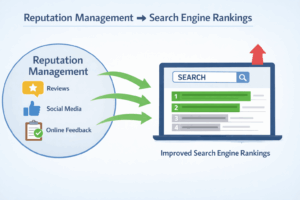
SEO (search engine optimization) and ORM (online reputation management) overlap because search engines, like Google, is where people form opinions fast. When someone types your brand name into a search engine, your online reputation shows up in a list of links, snippets, images, and review stars. Those results often decide whether you get a call, a meeting, or a sale.
At HLK Marketing, we treat SEO reputation management as a performance system. We focus on what ranks, why it ranks, and what needs to change to align your brand’s image with the reality of your work. The goal is to control the first page, maintain stable search engine rankings, and avoid surprises when someone checks your name.
SEO Reputation Management in simple terms

SEO reputation management means improving what people see when they look you up. It combines reputation management and ranking work so your best assets appear higher in search results. It also reduces the visibility of negative content that damages trust.
This is not theory. It is measurable. You track search engine results, you improve what deserves to rank, and you replace what does not.
Why reputation management starts in the search engine
Most reputation damage is not about a post existing. It is about a post ranking. A single negative page on the first page can dominate how customers perceive you, even if it is outdated or misleading.
ORM works best when you treat the search engine like a competitive marketplace. Better pages win. Better authority wins. Better clarity wins.
What people do when they research your brand online
People search a name, then they scan. Users tend to click the top few results and skim titles, snippets, and star ratings. They read reviews when they see social proof close to the top. They also notice patterns, like multiple complaints across review platforms or repeated headlines from news sites.
This is why your brand’s online reputation cannot rely on one website page. You need a full set of controlled assets across the places the search engine trusts.
Online reputation management vs reputation management

Online reputation management is the work of shaping trust signals across the web, not only on your site. Reputation management is the broader strategy and ongoing process that covers search results, online reviews, profiles, and press.
Both matter. HLK runs online reputation management with a ranking-first mindset, so the improvements show up where decisions happen.
What is reputation management in SEO?
Reputation management in SEO means using ranking work to protect and improve your online reputation. You identify what harms trust, then you build stronger alternatives that earn higher placement in search results. You also improve your existing assets so they climb and hold.
This includes reputation management seo tactics like content strategy, authority building, and on-site fixes. It also includes moving fast during a reputation crisis, without doing reckless moves that create more attention for the wrong pages.
The first page is the battlefield
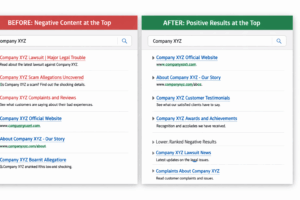
The first page drives perception. It also drives clicks. When negative reviews, bad headlines, or hostile threads sit near the top, the damage repeats every day.
HLK focuses on first-page ownership. We build, improve, and position assets so your brand’s reputation becomes clear and consistent across search results. This includes AI overviews and Google AI mode.
Search engine results pages and click behavior
Search engine results pages reward clarity and engagement. If your titles look weak, people skip you. If your snippets look confusing, they click the drama instead. This is where meta descriptions matter. Done right, they frame your value and reduce curiosity clicks on negative content.
We treat snippet work as part of reputation management. It is not decoration. It changes behavior, and behavior shapes performance.
Search engine rankings and trust signals
Search engine rankings follow signals the platforms trust. Authority, relevance, and consistency matter. Reviews matter in local contexts. Mentions matter for brand-level queries. Technical stability matters for every page that needs to compete.
HLK ties reputation management to these signals so your online reputation improves in the places that decide outcomes.
What does SEO management mean?
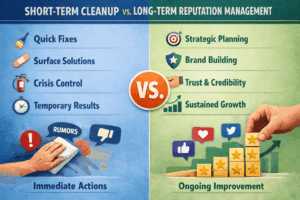
SEO management means ongoing work to keep your pages competitive, crawlable, and relevant. In a reputation management context, SEO management protects your branded results from drift and prevents new negative content from taking over. It also helps your positive assets climb and stay on the first page. You need maintenance, not a one-time cleanup.
Reputation management and review management
Review management is a core part of reputation management. It covers how you request feedback, how you respond, and how you stabilize your rating profile over time. It also covers how you address negative feedback without triggering a public argument.
HLK builds a review management process that protects your listings and strengthens your online reputation through consistency.
Online reviews shape decisions
Online reviews influence conversions and buyer confidence. They also influence visibility for local searches and map results. When people read reviews, they often treat them as reality, even when the sample size is tiny.
This is why you need volume, recency, and a system for leave reviews after real customer wins.
Negative reviews vs bad reviews
Negative reviews vary in intent and accuracy. Some are fair. Some are exaggerated. Some are malicious. Bad reviews are the ones that hit hard because they show up at the wrong time and in the wrong place, often close to the top of search results.
HLK helps you handle both, with response strategy and visibility strategy.
Google reviews and Yelp reviews
Google reviews impact local visibility and trust at scale. Yelp reviews matter in categories where Yelp ranks well and where customers treat the platform as a deciding factor. We track both, along with other review sites that appear for your brand and service queries.
We also help you respond promptly to reviews in a tone that protects trust and avoids escalation.
Customer feedback and reply strategy
Customer feedback is useful data, not only reputation risk. The right reply approach shows professionalism and consistency. It also shows you take concerns seriously without sounding defensive.
This is part of actively managing your brand’s online reputation, not only reacting when things go wrong.
Encouraging customers without sounding desperate
Satisfied customers often do not leave reviews unless asked. Encouraging customers works best when the request is timely and simple. You also need a clean process so staff know what to send and when to send it.
HLK builds messaging templates and routing, so review management stays consistent across your team.
Local searches and local SEO reputation management
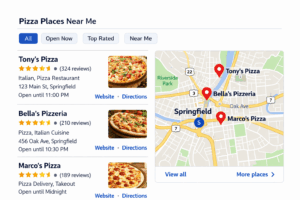
Local searches trigger listings, star ratings, and nearby competitors. This is where local seo becomes reputation management. Your listing quality, citation consistency, and review profile shape your online reputation at the local level.
HLK runs local seo with a reputation-first approach. We align your data, improve your presence, and reduce listing weaknesses that invite doubt.
Local directories and consistency
Local directories still matter because they influence trust and data accuracy across the web. One wrong phone number or duplicate listing can create confusion and missed leads.
We clean up local directories as part of reputation management, then we reinforce the correct data across your footprint.
Prospective customers and the trust gap
Prospective customers decide fast. If they see mixed signals on the first page, they hesitate. If they see consistent positive signals, they move forward.
Reputation management closes the trust gap by aligning what your business is with what the web shows.
Potential customers and local-level search behavior
Potential customers often start with a name search, then compare options. They look at star ratings, headlines, and the tone of top results. They also look for proof, like case studies, awards, and third-party mentions.
SEO reputation management makes sure they find your proof first.
Brand identity and brand image
Brand identity is what you stand for. A brand’s image is what the public sees. When those two drift apart, you lose control of your story.
Reputation management exists to close that drift. HLK builds the assets and signals that pull your brand’s image back in line with reality. When it comes to brand image, online visibility and customer perception matter.
Brand’s online reputation and risk
Your brand’s online reputation is an asset and a liability. It drives sales, hiring, partnerships, and investor confidence. It also becomes fragile during conflict, layoffs, lawsuits, or a reputation crisis.
HLK treats reputation management like risk management. We build defenses before you need them.
Negative content and why it ranks
Negative content often ranks because it sits on strong domains, it earns clicks, or it matches the query cleanly. It can also rank because your owned assets are weak, outdated, or technically blocked.
This is where technical seo matters and where content strategy matters. You need stronger competitors in search results.
News sites, news articles, and suppression reality
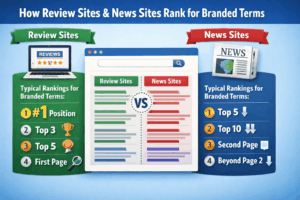
News sites often outrank brands because they carry authority and earn links. News articles can sit on the first page for years, even if the story is old.
HLK approaches these situations with realism. We focus on building assets that deserve to outrank, then we build authority so the search engine follows.
Press releases and controlled messaging
Press releases work when they publish on credible networks and support a broader strategy. They help with entity signals, citations, and positive stories that other outlets reference.
HLK uses press releases as support, not as the whole plan. The plan is still to win search results with stronger assets.
United Airlines and reputation momentum
United Airlines shows how fast narratives spread and how long search results can hold a story. United Airlines also shows why brands need a structured response and a long-term search strategy when headlines hit.
You do not need to be a global company to face the same mechanics. A single page can define your online reputation if you let it.
PR crisis response and what matters first
During a PR crisis, you need speed, clarity, and coordination. You also need a plan that does not trigger more attention to the damaging page. HLK helps clients prioritize publishing, positioning, and reputation management actions that stabilize the situation. This is not the time for random posts and emotional replies.
Deep dive audit and the HLK process
HLK starts with a deep dive audit of branded terms, executive terms, and local searches. We map the search results, measure the authority of each page, and identify the fastest levers for movement.
Then we build a roadmap that connects reputation management SEO tactics to outcomes you see on the first page.
Technical SEO that supports reputation management
Technical SEO is not optional when you need rankings. If a page cannot be crawled, indexed, or understood, it cannot compete. We audit crawl paths, site structure, indexation, and internal linking. We also fix broken links that waste authority and reduce trust.
This is part of the technical aspects that separate real SEO reputation management from surface-level cleanup.
Relevant content and search intent
Relevant content wins because it matches what people search and answers it clearly. In reputation management, relevant content also needs proof. You do not win by saying you are great. You win by showing why.
HLK builds pages that match intent and earn trust through specifics, not hype.
Positive content that outranks
Positive content needs structure and focus. It also needs a clear reason to exist. We build controlled assets like bio pages, service pages, case studies, and media pages. We also build supporting articles and resource pages that reinforce the main pages.
This creates a cluster that strengthens your search engine rankings and increases resilience.
Online content and publishing cadence
Online content supports reputation management when it is consistent and tied to a plan. Random posts rarely move search results. Focused publishing does.
HLK builds a publishing cadence that supports rankings, trust, and clarity across your brand online footprint.
Link building and authority growth
Link building supports authority. Authority supports rankings. Rankings support reputation management outcomes.
HLK focuses on quality placements and industry specific relevance. We avoid risky shortcuts that create cleanup later. The goal is stable search results, not temporary spikes.
More control through owned assets
Owned assets give you more control because you can edit, expand, and improve them quickly. We strengthen your website pages and your social media sites, then we connect them through clear entity signals.
This creates a defensible presence across the search engine ecosystem.
Positive reviews and conversion lift
Positive reviews help reduce friction. They also help you recover faster after negative reviews hit. You want a steady flow of positive reviews so one bad moment does not define your brand’s reputation.
This also supports new customers and stronger close rates.
Positive reputation and trust
A positive reputation is not a slogan. It is a pattern of proof across search results, reviews, and third-party mentions. When the pattern is consistent, it fosters trust.
HLK builds the pattern and maintains it through ongoing reputation management.
Positive online reputation and long-term stability
You want a positive online reputation because it lowers sales friction and reduces reputation risk. It also supports recruiting and partnerships, especially when people search executives and leadership teams.
This is long-term work. The upside compounds.
SEO strategies that work for reputation management
Effective seo strategies in reputation management focus on competing assets, not wishful thinking. You strengthen what should rank. You build what is missing. You raise authority across your footprint.
HLK uses seo strategies that tie directly to search rankings movement and first page outcomes.
Digital marketing and reputation management
Digital marketing and reputation management overlap because both shape perception. Digital marketing brings visibility, and reputation management protects conversions by removing doubt. When both work together, you get a cleaner funnel and more customers from the same demand.
HLK connects digital marketing performance to brand protection so your growth does not outrun your trust signals.
Reputation management SEO for executives and brands
Reputation management seo becomes critical when your name is tied to deals, funding, hiring, or high-trust industries. One damaging result can derail opportunity, even when your product is strong.
HLK specializes in high-stakes work where the first page matters more than vanity metrics.
FAQs
How much does reputation management cost?
Reputation management cost depends on scope, urgency, and competition. A local review management program costs less than a campaign fighting news sites and strong domains. Cost also depends on how many assets need to be built and how fast you need movement.
HLK prices based on complexity, risk, and execution needs. We focus on measurable progress in search results and reputation stability.
How much does an ORM consultant typically cost?
Online reputation management pricing ranges widely. Low-cost vendors often focus on templated replies and basic listings work. Serious reputation management that includes content, authority growth, and technical work costs more because it requires real execution.
HLK operates as a boutique provider. We focus on outcomes tied to the first page and brand protection, not generic activity reports.
What to do next if your search results look risky?
Start by documenting what ranks today. Capture the top search results for your brand terms and key people. Note which URLs drive doubt, and which assets feel weak. Then build a plan that improves your owned properties, strengthens your review profile, and creates positive content that can outrank.
In SUMMARY
If you want a team that runs SEO reputation management with discipline, HLK is built for it. We combine reputation management, online reputation management, technical seo, review management, link building, and content strategy into one system. We focus on your brand online presence, your brand’s reputation, and the first page outcomes that drive revenue.
This blog post is meant to show you the framework. The results come from execution, consistent measurement, and decisions based on what the search engine is rewarding right now.